
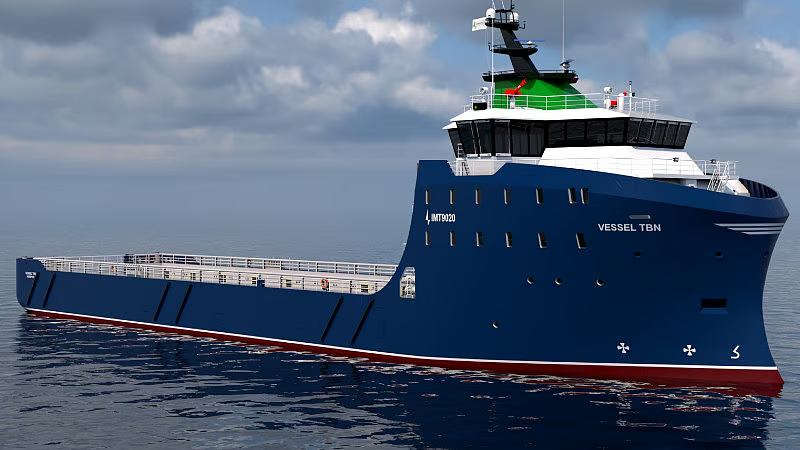
In the vast expanse of the ocean, where oil and gas platforms stand as beacons of human ingenuity, the psv vessel plays a pivotal role. Short for platform supply vessel, this type of ship is the lifeline for offshore installations, ferrying essential supplies, equipment, and personnel across challenging waters. Imagine a robust floating warehouse, engineered to withstand harsh marine environments while ensuring efficient logistics. The design and technical specifications of a psv vessel are crafted with precision to meet the demands of the energy sector, balancing functionality, safety, and environmental considerations. As the offshore industry evolves, understanding these vessels becomes crucial for engineers, operators, and enthusiasts alike. In this article, we delve into the core elements that make a psv vessel an indispensable asset, exploring its architecture, capabilities, and the innovations that drive its performance.
What is a PSV Vessel?
A psv vessel is specifically designed to support offshore platforms, primarily in the oil and gas industry. These ships transport a variety of cargoes, from drilling fluids and bulk materials to tools and provisions. What sets a psv vessel apart is its adaptability to diverse operational needs, often customized for tasks like emergency response or subsea maintenance. The origins of the psv vessel trace back to the growing need for reliable supply chains in remote ocean locations, where traditional shipping methods fall short. Today, a modern psv vessel embodies advanced engineering, incorporating features that enhance its versatility and efficiency. Whether navigating through calm seas or battling stormy waves, the psv vessel ensures that platforms remain operational, highlighting its importance in sustaining energy production worldwide.
Key Design Features of PSV Vessels
The design of a psv vessel is a masterpiece of maritime engineering, focusing on durability, efficiency, and safety. At the heart of its architecture is the hull, optimized for superior seakeeping to minimize slamming against waves, which not only improves comfort for the crew but also reduces fuel consumption. This streamlined shape allows the psv vessel to maintain stability even in rough conditions, making it ideal for long-duration missions.
Moving to the deck layout, a psv vessel typically boasts a wide, unobstructed aft deck. This expansive area is perfect for carrying containers, mission equipment, and bulk cargoes. The integration of liquid and dry bulk systems ensures safe and rapid transfer of materials like chemicals or drilling muds. Designers prioritize an ergonomic arrangement, with pathways that facilitate easy movement and quick loading or unloading operations. Additionally, modular configurations allow for on-site adaptations, such as adding modules for diving support or oil recovery, transforming the psv vessel into a multi-role platform.
Propulsion systems in a psv vessel are equally impressive. Many models feature diesel-electric or hybrid setups, providing flexibility and lower emissions. Azimuthing stern drives enable precise maneuvering, crucial for approaching platforms without anchors. Bow thrusters further enhance control, allowing the vessel to hold position dynamically. These features collectively contribute to the psv vessel’s ability to operate in dynamic positioning modes, ensuring it can stay steady amid currents and winds.
Technical Specifications
When it comes to technical specifications, a psv vessel varies by model, but common traits define its capabilities. Dimensions play a key role; for instance, lengths often range from around 60 to 85 meters, with beams spanning 16 to 18 meters. Depths and drafts are engineered to balance cargo capacity with navigational efficiency, typically around 5 to 7 meters for drafts. These measurements ensure the psv vessel can access various ports and platforms while carrying substantial loads.
Capacities are where the psv vessel truly shines. Deadweight tonnage can reach up to 4,500 long tons, allowing for heavy payloads. Deck areas frequently exceed 800 square meters, with strengths supporting up to 5 metric tons per square meter. Liquid mud tanks might hold over 2,000 cubic meters, while fuel oil capacities can surpass 1,300 cubic meters. Fresh water and ballast systems are integrated to maintain stability, and accommodations cater to crews of 28 to 42 people, complete with comfortable cabins, lounges, and medical facilities. These specs underscore the psv vessel’s role as a self-sufficient unit, capable of extended voyages without frequent resupply.
Speed and performance metrics are optimized for reliability. A psv vessel often achieves cruising speeds of 12 to 14 knots, with economical modes reducing fuel use. In fully loaded conditions, maintaining 13 knots is a benchmark for efficiency. Power generation comes from multiple diesel generators, totaling thousands of kilowatts, supporting propulsion and onboard systems. Dynamic positioning class 2 ensures redundancy, with thrusters and sensors working in tandem to hold position accurately.
Safety and environmental considerations are woven into every aspect of a psv vessel’s specifications. Compliance with international standards like SOLAS and classification societies ensures robust construction. Firefighting equipment, including high-capacity pumps, protects against hazards, while low-emission technologies and waste heat recovery systems minimize environmental impact. Ballast water management and anti-fouling coatings further align the psv vessel with sustainable practices, reflecting the industry’s shift towards greener operations.
Applications and Operations of PSV Vessels
In practice, a psv vessel operates as the backbone of offshore logistics. Daily routines involve loading at shore bases with supplies like pipes, cement, or food, then sailing to platforms for delivery. The vessel’s design facilitates hose connections for transferring liquids and crane operations for deck cargo. Crews trained in specialized handling ensure smooth transfers, even in adverse weather.
Beyond standard supply runs, a psv vessel can adapt for specialized tasks. For example, equipping it with remotely operated vehicles allows for subsea inspections, or adding firefighting gear turns it into an emergency responder. In storytelling terms, picture a psv vessel as a versatile hero in an oceanic adventure, ready to pivot from routine deliveries to critical interventions. This flexibility extends its utility to emerging sectors like offshore wind farms, where similar logistical needs arise.
Operators value the psv vessel for its cost-effectiveness. Fuel-efficient designs lower operational expenses, while modular features reduce downtime for reconfigurations. Maintenance is streamlined through accessible machinery spaces and durable materials, ensuring longevity in corrosive marine environments. As technology advances, integrations like autonomous navigation systems are on the horizon, promising even greater efficiency for the psv vessel.
Conclusion
The design and technical specifications of a psv vessel encapsulate the pinnacle of maritime innovation, tailored to the rigorous demands of offshore industries. From its resilient hull and expansive decks to powerful propulsion and ample capacities, every element is engineered for optimal performance. As we navigate towards a more sustainable future, the psv vessel continues to evolve, incorporating eco-friendly technologies without compromising on reliability. Understanding these vessels not only highlights their engineering prowess but also their critical role in global energy supply chains.
FAQs
What does PSV stand for in maritime terms?
PSV stands for platform supply vessel, a type of ship dedicated to supporting offshore platforms with essential supplies and services.
How does a psv vessel differ from other offshore vessels?
A psv vessel is primarily focused on logistics and supply, featuring large cargo decks and specialized tanks, unlike anchor handlers or drillships which have different primary functions.
What is dynamic positioning in a psv vessel?
Dynamic positioning allows the psv vessel to maintain its position using thrusters and sensors, essential for safe operations near platforms without anchoring.
Are psv vessels environmentally friendly?
Modern psv vessels incorporate low-emission propulsion and waste management systems to reduce their environmental footprint, aligning with global sustainability goals.
How many people can a typical psv vessel accommodate?
Accommodations on a psv vessel usually range from 28 to 42 people, including crew and additional personnel, with facilities for comfort during long voyages.
What kind of cargoes does a psv vessel carry?
A psv vessel transports drilling fluids, bulk materials, containers, fuel, water, and equipment, customized based on the platform’s needs.